Automatic language translation
Our website uses an automatic service to translate our content into different languages. These translations should be used as a guide only. See our Accessibility page for further information.
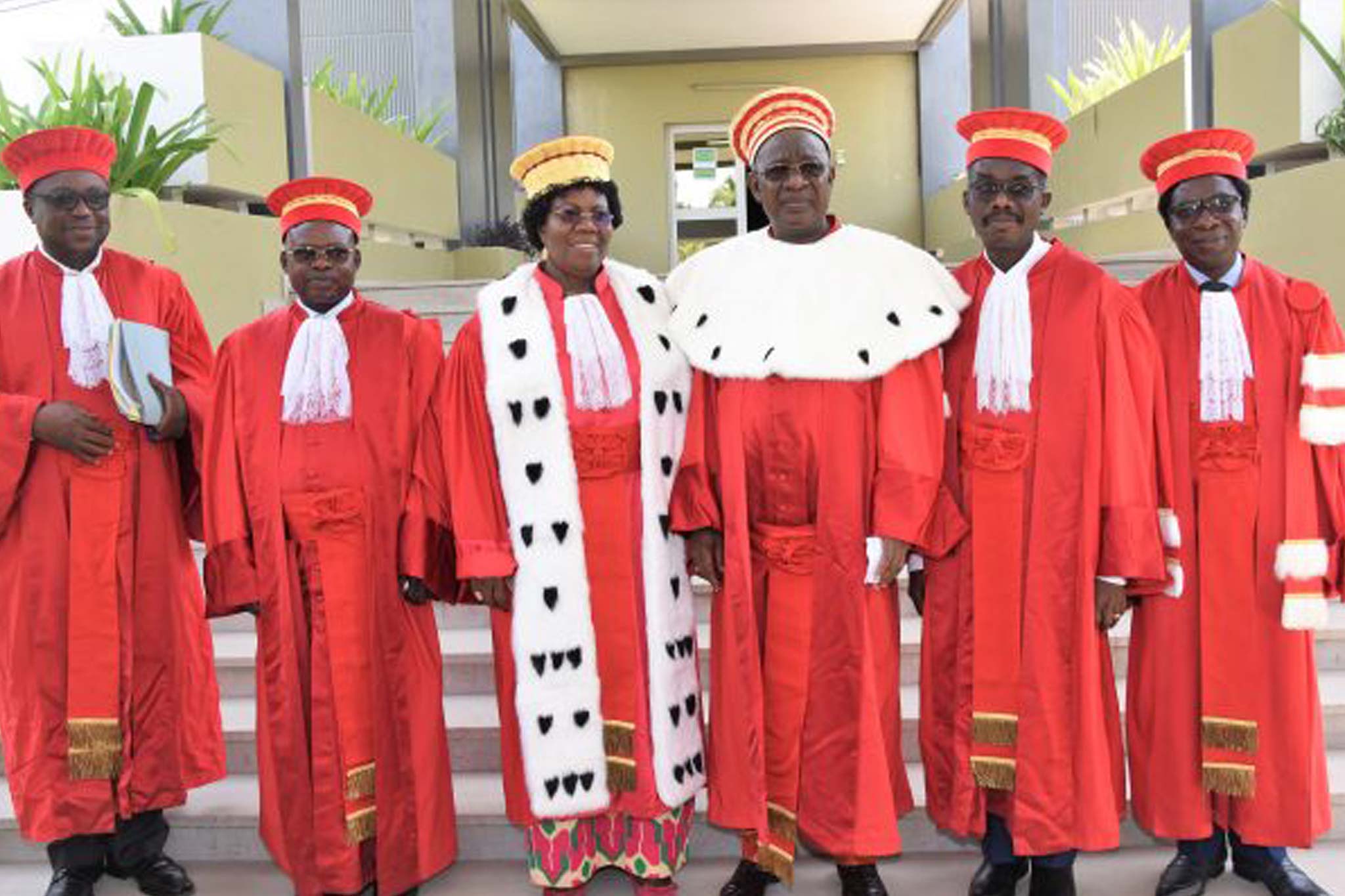
The high court of justice of Togo, founded in 1961, is the highest Togolese court in judicial and administrative matters. Reformed in 1992, it consists of two chambers: one administrative and one judicial.
The high court of justice of Togo was officially established by the Act of 16 August 19611, but did not take full office until the presidency of Nicolas Grunitzky2. The new constitution he introduced in 1963 defines the Court's tasks, including ensuring the regularity of the election of the President, the Vice-President and the deputies, ensuring the constitutionality of laws and organic laws. However, this constitution was superseded by General Eyadéma coup.
From 1964, it consisted of four chambers, including a constitutional chamber3. The 1992 reform reduces this number to two: a constitutional and a judicial one2. It is again reformed by the Act of 6 March 1997, 4when the Constitutional Court is established.
The two courts were initially designed to be complementary, one taking care of the violations of the Constitution (Constitutional Court) and the other for crimes and appeals (high court of justice).2 Although it was long located on the premises of the former courthouse in Lomé, built in 19275, it moved to the villas of the Council of Understanding in 2008, in the same city.
The President of the high court of justice is appointed by the Supreme Council of the Judiciary, which is itself headed by the President of the high court of justice. The Council has three members of the high court of justice7. The High Court of Justice is one of its members as the President of the high court of justice.
Its two chambers must have four advisers. The Supreme Council of the Magistracy proposes candidates for the status of counsel and judge. All are appointed by decree of the Council of Ministers and must be sworn in before the high court of justice
The high court of justice has jurisdiction in the constitutional, judicial, administrative and financial spheres.
In particular, the Constitutional Chamber decides on cases against judges and appeals in cassation against decisions handed down as a last resort by civil, commercial, social and criminal courts.
The Administrative Chamber has jurisdiction over appeals for abuse of power, agreements in local elections, and administrative decisions from the administration, professional bodies and private bodies
We acknowledge the traditional owners and custodians of the land on which we work and we pay respect to the Elders, past, present and future.